
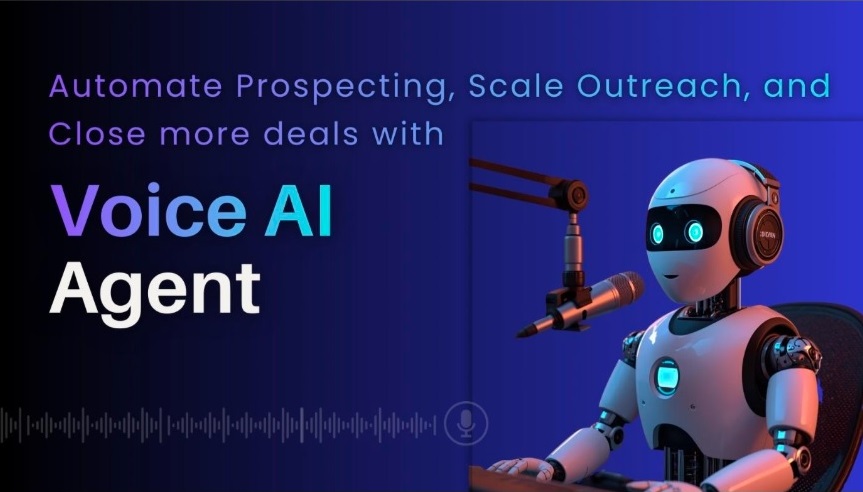
Automate prospecting, scale outreach, and close more deals with Voice AI Agents
Doesn't it sometimes seem like your sales crew is trapped in the '90s? Those cold calls just hitting voicemail, over and over. Here's the thing: in today's market, an AI sales agent is changing the game. These smart voice tools handle the grunt work, letting humans focus on what really matters - sealing the deal. We're talking automation that prospects leads 24/7, scales outreach without burnout, and boosts close rates. Sound too good? Stick around. We'll break it down.
Sales hasn't evolved much in decades. You know how it goes: pick up the phone, spit out the pitch, chase 'em down, do it again. But Voice AI Agents? They're turning it all upside down.
Why Voice AI? It's Not Just Hype
Here’s a simple reality: people glaze over a lot of marketing emails, even though the average open rate sits somewhere in the 20-30% range depending on the industry. Yet when someone actually calls with a relevant reason, a surprising chunk of B2B buyers will still take that conversation - recent reports show a clear willingness to pick up the phone if the outreach feels worthwhile.
Instead of feeling like a stiff IVR menu, the better voice AI tools talk and listen in a way that feels almost like chatting with a real rep - they catch what someone says, interpret what it means, and then answer back with a natural-sounding voice that flows like a normal conversation. On top of that, they can run the entire first line of attack for you: calling out to prospects, asking the opening questions, sorting who’s a fit, and even dropping confirmed meetings straight onto the calendar without ever needing a coffee break.
Honestly, the pace they operate at puts a human team to shame. It’s like having a room full of reps dialing in parallel, all day, every day.
Prospecting on Autopilot: Find the Right Leads, Effortlessly
Manual prospecting sucks. Scrolling LinkedIn, guessing emails, crossing fingers. Enter automation.
Voice AI Agents scrape data, score leads, and start calling. They use intent signals - website visits, content downloads - to prioritize hot prospects. Instead of random dialing, outreach starts to feel more like a sniper shot than a spray-and-pray campaign.
- Lead Discovery: Reaches into tools you already use - like your CRM (Salesforce, HubSpot, etc.) - and then adds in extra info from third-party datasets so each contact record becomes much more complete and useful.
- Qualification: Follows smart branching scripts that dig into needs and timing, tossing out simple but sharp questions like "What’s slowing you down right now in this part of the process?" to surface real blockers quickly.
- Scheduling: Once someone’s interested, it jumps straight to locking in a time, syncing with your calendar app so meetings appear automatically without back-and-forth
One client we worked with cut prospecting time by 70%. They went from 50 manual calls a day to 500 automated ones. Kind of makes you think - why waste human hours on low-value touches?
Scaling Outreach Without the Chaos
Outreach scales when it's smart, not spammy. AI sales agents make it happen by personalizing at volume.
Imagine 1,000 calls a week, each tailored. The agent pulls prospect details - recent funding, job changes - and weaves them in: "Congrats on the Series B, Sarah. How's scaling sales going?"
No fatigue. No compliance slips. They log every call, transcribe convos, and flag high-potentials for your team.
| Method | Speed | Personalization | Cost per Lead | Human Involvement |
|---|---|---|---|---|
| Manual Cold Calling | Slow (10–20/day) | High | $$ (salaries) | Full |
| Email Blasts | Fast | Low | $ (tools) | Setup only |
| Voice AI Agents | Blazing (100s/day) | High (dynamic) | $ (subscription) | Oversight only |
Does anybody really prefer long email chains anymore? Voice cuts through the noise.
Building Your Dream AI Sales Team
Forget hiring reps who quit after six months. An AI sales team runs forever. Mix them with humans for the win.
We layer it like this:
- Tier 1: AI Handles Volume - Cold outreach, basic quals.
- Tier 2: Human Follow-Up - Warm leads get the personal touch.
- Tier 3: AI Nurtures - Drips calls, re-engages dormant prospects.
AI customer segmentation supercharges this. Agents analyze call data - tone, keywords, hesitations - to bucket leads: hot, warm, cold. One company segmented their list into "growth-focused" vs "cost-cutters," tailoring pitches. Result? 40% higher response rates.
To be fair, not every business needs a full squad. Start small.
Closing Deals: Where the Magic Happens
Finding leads and reaching out? That’s just the basics. Closing? That's the money maker.
Voice AI Agents shine here. They demo products via voice - explaining features, answering FAQs in real-time.
Objection handling is clutch. Trained on thousands of calls, they counter smoothly: "I get the budget concern. Let's explore a pilot - no risk."
Stats back it: Companies using voice AI see meaningful jumps in win rates, often in the 30-50% improvement range according to various industry analyses. Why? Trust. Voice feels human. One rep told us, "My AI sales representative warms leads so well, I close 2x faster."
You wonder why more companies don't jump in. Integration fears? A lot of the newer platforms ship with ready-made hooks into mainstays like HubSpot, Salesforce, and even automation hubs such as Zapier, so wiring everything together usually feels more like configuration than a heavy IT project.
Real-World Wins: Stories from the Trenches
Take SaaS firm GrowEasy. They deployed Voice AI for B2B lead gen. First month: 300 meetings booked. Pipeline doubled.
Or retail chain QuickMart. AI in B2B marketing automated supplier outreach. Suppliers loved the voice check-ins - response time dropped from days to hours.
What’s interesting is that stories like these are showing up more and more in case studies and industry roundups, as sales teams move away from relying only on email and start blending voice AI into their outbound and follow-up playbooks. In other words, this shift isn’t a one-off experiment anymore - it’s becoming a pattern.
Getting Started: A Framework
Ready to automate? Here's our 5-step playbook. Skip the fluff.
- Audit Your Funnel - Where do reps waste time? Prospecting? Follow-ups?
- Pick a Platform - Look for CRM integration, custom voices, analytics.
- Train the Agent - Feed it your scripts, top objections, win patterns.
- Test Small - 100 calls to a segment. Tweak based on transcripts.
- Scale and Measure - Track bookings, SQLs, ROI. Adjust weekly.
Pro Tips for Max Impact
- Use hyper-personalization: Mention company news in the first 10 seconds.
- A/B test voices: Male? Female? Accent? Data shows 15% lift from matches.
- Compliance first: TCPA, DNC lists - agents handle it automatically.
- Monitor sentiment: AI flags frustrated tones for human intervention.
Challenges? Yeah, We've Seen Them
Not all sunshine. Early agents sounded robotic. Accents tripped up global teams. Data privacy? Huge deal in GDPR land.
But tech's leaped. Modern ones get close to indistinguishable from people in many routine conversations. Accents? 50+ options. Privacy? End-to-end encryption has basically become table stakes.
Cost? Starts at just a few cents per call on many platforms, which ends up cheaper than a single coffee run for your reps.
The Future: AI Sales Reps Evolve
The current tools are really just the opening chapter. Coming next: systems that can predict churn while someone is still on the line, adjust pricing or offers mid-conversation, and maybe even blend voice with video for richer, almost face-to-face style demos.
In short, the companies that lean into this early tend to see an unfair advantage - faster cycles, better data, and more consistent pipeline.
So, what’s holding you back at this point? Your sales process is practically asking for a smarter assist. Let the machines take over the repetitive grunt work so your team can lean into what humans do best - building trust, reading nuance, and closing the deals that actually move the revenue needle.